
FOR IMMEDIATE RELEASE
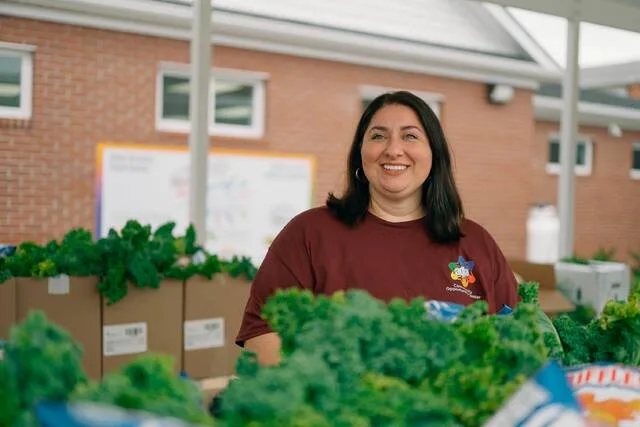
For Stephanie Corona, earning a bachelor’s degree in Human Services from the University of Mount Olive was about more than completing a degree. It was a chance to strengthen the skills she uses every day to serve individuals and families in her community.
Corona graduated in 2026 after completing UMO’s Human Services program online. She now serves as Office Manager at the ADLA Community Opportunity Center in Mount Olive, where her responsibilities include staff documentation and compliance, grant and program tracking, community partnerships, scheduling, data and reporting, and coordinating programs and events.
She earned her degree while working full-time and raising a family, managing coursework around the rest of her responsibilities.
“Balancing work, school, and family responsibilities was definitely challenging, but UMO gave me the flexibility I needed to continue my education without putting the rest of my life on hold,” Corona said. “Being able to manage my coursework around my other responsibilities made earning my degree possible.”
Human Services was a natural fit for both her interests and her career goals. She wanted to better understand the challenges individuals and families face while developing the ability to connect people with resources and support.
“I have always enjoyed helping people and connecting them with resources,” she said. “I wanted a degree that would allow me to work directly with individuals and families while also understanding the larger systems and barriers that can affect them.”
That perspective now shapes her work at ADLA, which serves community members facing food insecurity, employment challenges, limited digital literacy, transportation barriers, and difficulty accessing education, training, mental health, and peer support resources. The organization responds through offering a food pantry, workforce development and job-search assistance, digital literacy classes, culinary programs, peer support services, and community outreach, and partners with other organizations to connect people with resources beyond what it provides directly.
“I was drawn to ADLA because of its focus on helping people overcome barriers and connecting them with resources that can make a real difference in their lives,” Corona said. “I enjoy being part of an organization that is rooted in the community and is able to meet people where they are.”
Corona’s coursework at UMO — focused on individuals, families, communities, resources, social systems, ethics, and communication — gave her a foundation she draws on in her daily interactions with participants, colleagues, and community partners.
“UMO helped me better understand people and the importance of meeting individuals where they are,” she said. “Those skills are something I use every day at ADLA.”
Her education also reinforced the importance of looking beyond an immediate need to understand the broader circumstances affecting a person.
“My education has helped me look at the whole person instead of only the immediate problem in front of them,” Corona said. “It has taught me to consider the barriers someone may be facing, their environment, their support system, and the resources that are available to them.”
That approach means treating people with respect and dignity while helping them build greater independence.
“Helping someone is not always about solving one immediate problem,” she said. “It is also about understanding the different challenges affecting that person and helping connect them to the right resources and support.”
“The most rewarding part is seeing the direct impact our work can have on a person or family,” Corona said. “Something that may seem small, like helping someone find a job, learn how to use a computer, access food, or connect with a service, can make a huge difference in their life.”
Corona encourages current students to begin building connections between their education and their future careers well before graduation.
“Look for opportunities to apply what you are learning before you graduate,” she said. “Volunteer, network, participate in community organizations, and do not be afraid to take opportunities that may be outside of what you originally pictured for yourself.”
“Sometimes your degree opens doors to careers you did not even know existed,” Corona said. “Also, build relationships with people in your community because those connections can be just as valuable as what you learn in the classroom.”